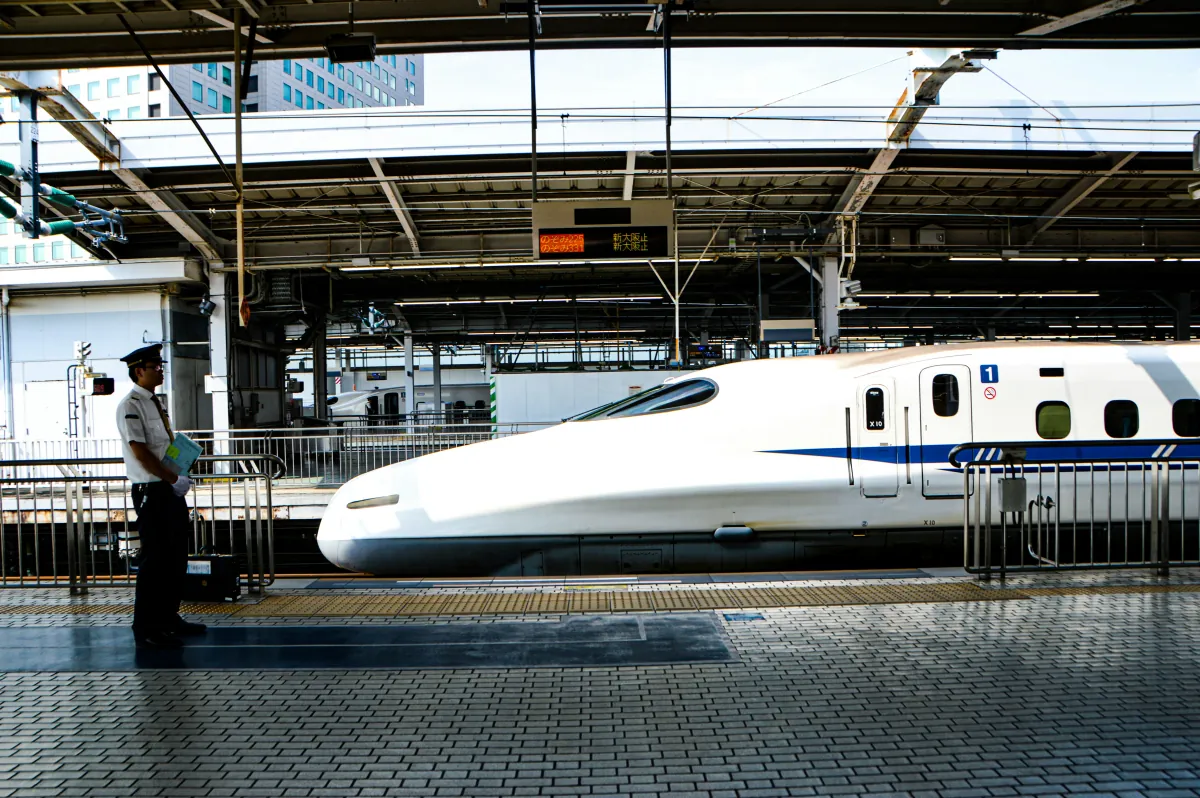
Is the nationwide JR Pass worth it after the massive price increase? We break down the costs, compare Shinkansen tickets, and explore JR Regional Passes.

JPN Path
Editorial TeamThe Shinkansen Cost Dilemma: Deciding on Your Train Pass
Japan's Shinkansen (bullet trains) are world-famous for their speed, punctuality, and comfort. Historically, the nationwide Japan Rail (JR) Pass was an automatic recommendation for any traveler planning a multi-city journey. However, following a massive 65% price hike, the financial math has completely changed. Before spending hundreds of dollars on a rail pass, it is crucial to analyze your itinerary. Read our detailed JR Pass Rail Guide to understand how the system works.
Today, the nationwide JR Pass is rarely cost-effective for standard itineraries (such as a round-trip between Tokyo, Kyoto, and Osaka). In this guide, we will break down standard Shinkansen fares, compare standard tickets vs the JR Pass, and explore highly valuable JR Regional Passes that can save you significant money.
$330 - $700 USD
A 7-day Ordinary Car JR Pass costs approximately 50,000 JPY ($330 USD), a 14-day pass is 80,000 JPY ($530 USD), and a 21-day pass is 100,000 JPY ($660 USD). Green Car (First Class) passes cost roughly 35% more.
JR Pass vs. Standard Tickets: Cost Calculator Example
Let's compare the cost of buying individual Shinkansen tickets vs. a 7-day Ordinary JR Pass for a standard "Golden Route" itinerary:
| Journey / Ticket Segment | Standard Reserved Ticket Cost (JPY) | Standard Reserved Ticket Cost (USD) |
|---|---|---|
| Tokyo to Kyoto (Nozomi Shinkansen) | ~14,200 JPY | ~$95 USD |
| Kyoto to Osaka (Local JR Line) | ~580 JPY | ~$4 USD |
| Osaka to Hiroshima (Sakura Shinkansen) | ~10,600 JPY | ~$70 USD |
| Hiroshima to Tokyo (Nozomi Shinkansen) | ~19,000 JPY | ~$125 USD |
| Total Individual Ticket Cost | ~44,380 JPY | ~$294 USD |
| 7-Day Nationwide JR Pass Cost | ~50,000 JPY | ~$330 USD |
In this typical 7-day travel scenario, buying individual tickets is about $36 USD cheaper than purchasing the nationwide JR Pass. To check current ticket availability and prices for your specific travel dates, you can search the JR Rail Search Portal directly.
Booking Individual Shinkansen Tickets
If the nationwide pass is not worth it for your itinerary, buying point-to-point Shinkansen tickets is incredibly simple. Standard tickets give you access to the fastest bullet trains, the Nozomi and Mizuho, which are restricted or require heavy surcharges under the JR Pass.
Flexibility: Booking individual tickets means you do not have to crowd all your long-distance travel into a tight 7-day window. You can spend 4 days in Tokyo, 4 days in Kyoto, and 3 days in Osaka at your own leisure.
Airport Links: You can buy standalone tickets for airport express lines like the Narita Express or Kansai Airport Haruka. For more tips on navigating local train lines, see our guide on transportation in Japan.
Shinkansen Mount Fuji Seats: How to See Mt. Fuji from the Bullet Train
One of the most iconic moments in any Japan trip is catching a clear view of Mount Fuji from a speeding Shinkansen. But not every seat faces the mountain — and most first-time travelers miss it entirely without knowing the trick.
Which side to sit on: On Tokyo-bound trains (heading northeast), sit on the right side of the car, seats D or E. On trains heading towards Kyoto and Osaka (heading southwest), sit on the left side, seats A or B.
Best stretch: The clearest view appears between Shin-Fuji and Shizuoka stations, roughly 35 to 40 minutes after leaving Tokyo on a Nozomi or Hikari train.
Timing matters: Mt. Fuji is most visible in winter and early spring (November through March), when snow caps the summit and the air is clear. On humid summer days, cloud cover often obscures the peak entirely.
Book early: Window seats on the Mt. Fuji side sell out fast, especially during peak travel seasons. Book your seat assignment as early as possible when purchasing your ticket.
Pro tip: The mountain appears very briefly at high speed. Have your camera ready before you reach Shin-Fuji station.
Best Seat Numbers for Mt. Fuji
On the Tokaido Shinkansen (Tokyo to Osaka), choose seats in rows A or B when travelling south-west, and rows D or E when travelling north-east back to Tokyo. Look out the window from Shin-Fuji station onward and you will have a clear view of the summit on a fine day.
The Smart Alternative: JR Regional Passes
While the nationwide JR Pass is hard to justify, JR Regional Passes remain exceptionally good value. These passes are offered by the regional divisions of Japan Rail and cover specific territories. Below are the best options based on where you are travelling.
Kansai and Western Japan
JR Kansai Wide Area Pass: Costs around 12,000 JPY for 5 days. Covers Kansai Airport, Osaka, Kyoto, Nara, Kobe, Himeji, and Okayama — an outstanding bargain for exploring western Japan.
JR Kansai Area Pass: A more compact version ideal for a tight Kansai loop. Covers Osaka, Kyoto, Nara, and Kobe for 1, 2, 3, or 4 days.
Kansai Railway Pass Lite: A private railway alternative (non-JR) that covers Osaka, Kyoto, Nara, Kobe, Wakayama, and Yoshino on Kintetsu and other lines. Great value for temple-hopping.
JR West Passes: Planning a trip deeper into Western Honshu? Options include the Sanyo Area Pass and Hiroshima-Yamaguchi Pass.
Tohoku and Eastern Japan
JR East Passes: Cover unlimited Shinkansen and express trains north of Tokyo, including Tohoku, Niigata, Nagano, and Yamagata. Ideal for visiting Sendai, Aomori, or the Japanese Alps.
Hokkaido
JR Hokkaido Pass: Provides unlimited travel across all JR Hokkaido lines for 3 to 7 days. Perfect for exploring Sapporo, Hakodate, Noboribetsu, and Furano at your own pace.
Kyushu
JR Kyushu Pass: Covers the entire Shinkansen and limited express network across Kyushu, connecting Fukuoka, Nagasaki, Kumamoto, Beppu, and Kagoshima. Available for North Kyushu or All Kyushu zones.
Shikoku
JR Shikoku Passes: Ideal if you are doing the Shikoku 88-temple pilgrimage circuit or exploring Matsuyama, Kochi, and Tokushima.
Hokuriku (Central Alps and Japan Sea Coast)
JR Hokuriku Pass: Covers the stunning Hokuriku Shinkansen route connecting Tokyo to Kanazawa and Fukui — one of the most underrated rail journeys in Japan.
Day Trip Passes from Tokyo
Hakone Free Pass: Unlimited use of all Odakyu lines, Hakone Tozan Railway, ropeways, cable cars, and lake ferries within Hakone for 2 days. Outstanding value for a day trip or overnight from Tokyo.
Nikko Pass: Covers the Tobu Nikko line from Asakusa plus unlimited transport within Nikko, including buses to Toshogu Shrine and Kegon Falls.
Not sure which pass fits your route? Search and compare all JR Regional Passes by date and region to find the best option for your itinerary.
Shinkansen Luggage Rules
Shinkansen trains have strict rules for oversized baggage (suitcases with total dimensions between 160cm and 250cm). You must book a specific seat with an oversized baggage area in advance, or face a 1,000 JPY fine on the train. Standard carry-on bags can be stored on the overhead racks for free.
How to Decide: Your Booking Strategy
Follow this simple strategy to decide how to book your train travel:
✓Buy Individual Tickets If
- Relaxed Travel: Your trip spans more than 7 days with long stays in Tokyo and Kyoto.
- Simple Routes: You are only traveling one-way or round-trip between Tokyo and Osaka.
- Nozomi Access: You want to ride the fastest Shinkansen trains without restrictions.
✕Consider a Regional Pass If
- Regional Exploration: You are base-camping in Osaka and doing day trips to Hiroshima, Nara, and Kobe.
- North/South Focus: You are exploring Hokkaido or Kyushu extensively over a 5-to-7 day window.
Secure Your Bullet Train Passes
To ensure you get reserved seats, especially during peak seasons like Golden Week, Cherry Blossoms, or New Year, pre-book your rail passes online:
Nationwide JR Pass (best for 21+ day multi-region trips): Buy Now
JR Kansai Wide Pass (5 days, most popular regional pass): Buy Now
JR Hokkaido Pass (Sapporo, Hakodate, Furano): Buy Now
JR Kyushu Pass (Fukuoka, Beppu, Kagoshima): Buy Now
Hakone Free Pass (best day trip from Tokyo): Buy Now
Frequently Asked Questions
❓What is the difference between Green Car and Ordinary Car?
❓Do children need train tickets?
❓Can I buy Shinkansen tickets at the station on the day of travel?
Create Your Perfect Japan Itinerary
Customized daily plans, optimized routes, and curated local food recommendations tailored to your travel style.
Start Planning Now ➔About JPN Path
Editorial TeamThe JPN Path Editorial Team consists of local travel curators, cultural historians, and writers dedicated to sharing authentic, practical, and highly detailed guides for exploring Japan.
Continue Reading
How to Travel from Tokyo to Kyoto: Shinkansen vs. Flight vs. Bus (2026)
Planning your trip between Japan's two most famous cities? We break down the exact fares, schedules, and options for the Tokyo to Kyoto route to help you save time and money.
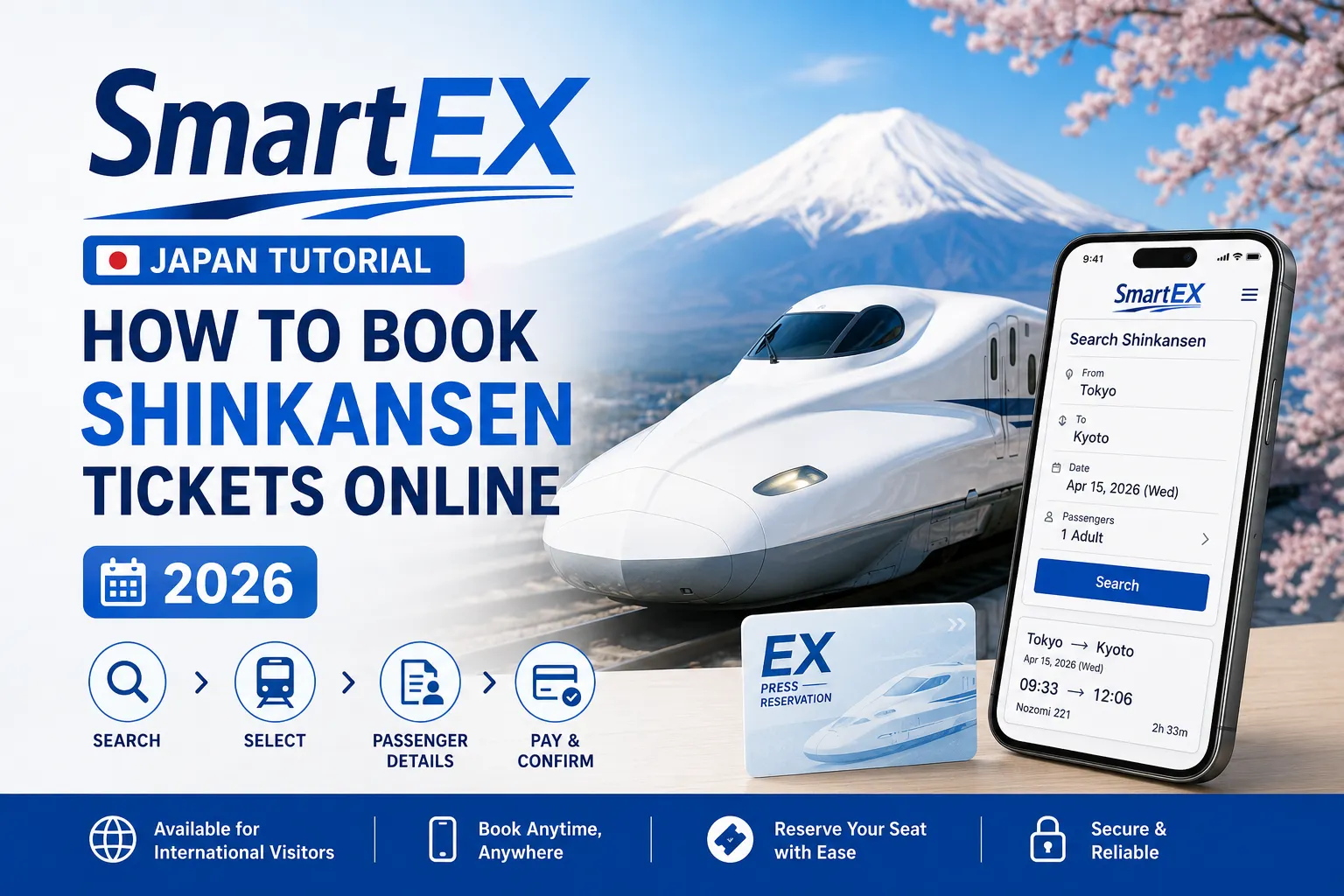
SmartEX Japan Tutorial: How to Book Shinkansen Tickets Online (2026)
Learn how to book Japan Shinkansen tickets online via SmartEX and JR-East, choose the right seats, link your IC card, and resolve credit card payment errors.